|
| |
| |
| |
| | | |
| | |
Hello again...
It's hard to believe we're already into August. While winter is still with us, the promise of spring is just around the corner and it's the perfect time to start thinking about getting our bodies moving again.
This month we're tackling one of the biggest myths I hear in clinic: Does lymphatic massage really "detox" your body? You'll also find a downloadable information sheet that explains what toxins actually are, how they enter the body, and the important (but often misunderstood) role of the lymphatic system.
August is also National Tradies Health Month, so we're shining a spotlight on swollen, tired legs. If you spend long days on your feet, it's easy to dismiss swelling as "part of the job," but persistent swelling should never be ignored.
As always, my goal is to provide practical, evidence-based information that helps you better understand your body and make informed decisions about your health.
I hope you enjoy this month's edition and if there's a topic you'd like me to cover in a future newsletter, I'd love to hear from you.
Take care
Jacqui 💜
So take 5, grab a cuppa and enjoy this month's Lymphatic Health Hub. |
| | | |
| | | |
| | | |
| | |
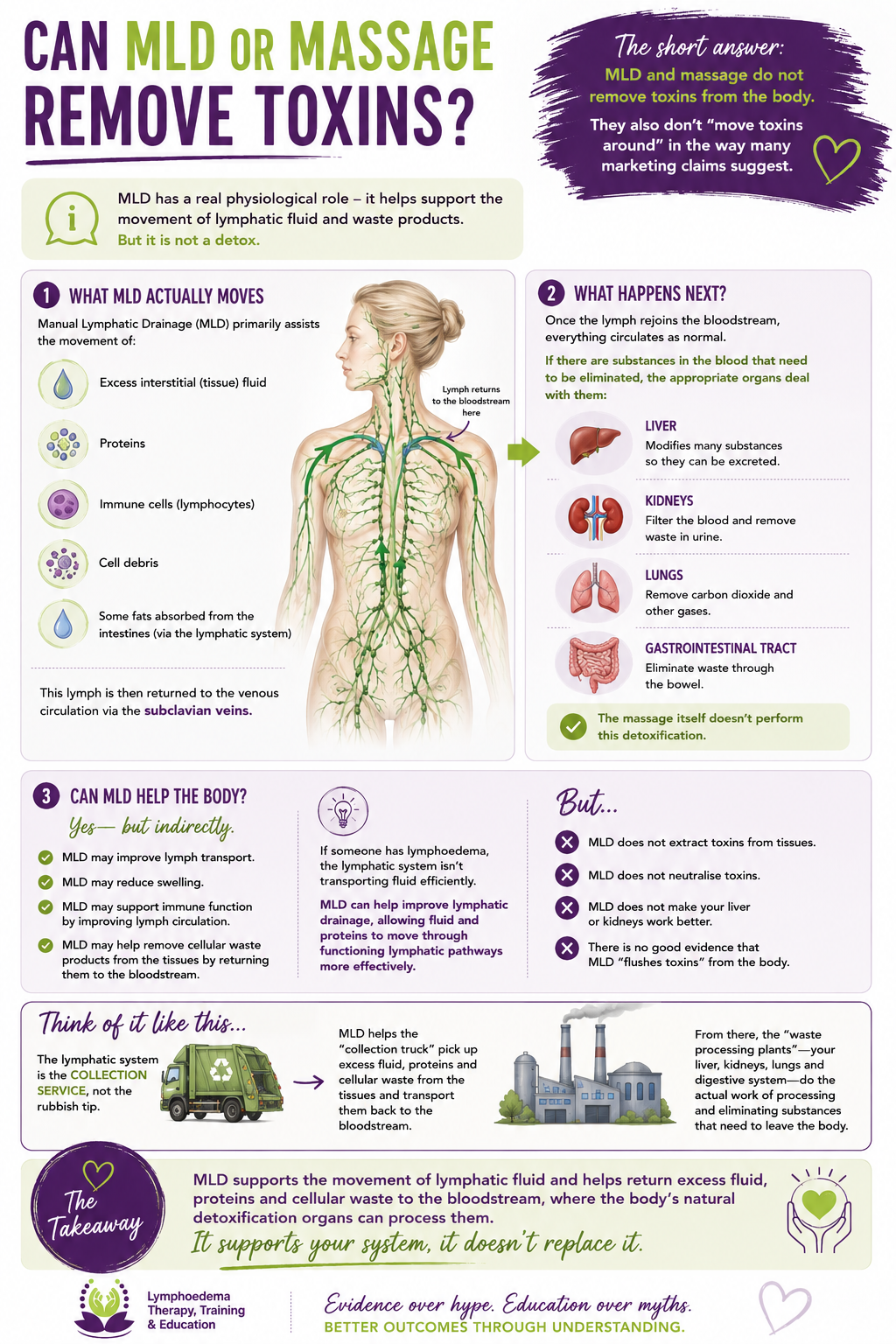
Myth of the Month!
🤔 Myth: Lymphatic Massage detoxes your body!
🔬 Fact:
Your body already has highly effective detoxification systems, primarily your liver, kidneys, lungs and gastrointestinal tract.
Manual Lymphatic Drainage (MLD) doesn't "flush toxins" out of your body. Instead, it is a gentle, evidence-informed treatment that helps support the movement of lymphatic fluid, particularly when the lymphatic system has been damaged or is under extra strain.
For people living with conditions such as lymphoedema, lipoedema or persistent swelling, MLD may help:
- Reduce swelling
- Improve comfort and mobility
- Support skin health
- Enhance quality of life
Rather than "detoxing," think of MLD as supporting the body's natural fluid management system.
💚 The takeaway: Your body is already designed to remove waste products. Lymphatic therapy helps improve fluid movement, it doesn't replace your body's detoxification organs.
What exactly is a toxin and how does it get into your body?
A toxin is a poisonous substance produced by a living organism, such as certain bacteria, plants or animals. Your body can also be exposed to other potentially harmful substances from the environment, medications and some chemicals (although these aren't technically toxins).
These substances can enter the body through:
🌬️ Breathing – air pollution, smoke or chemicals
🍎 Eating or drinking – contaminated food or water
🩹 Through the skin – some chemicals, plants or animal venoms
💉 Bites, stings or injections – such as snake venom, insect stings or some medications
Evidence over hype. Education over myths. Better outcomes through understanding. |
| | | |
| | | |
| |
| | |
What Every Woman Should Know About Lipoedema
Each month I host a relaxed online session where we explore living with lipoedema, answer your questions and discuss practical strategies that can make everyday life a little easier.
Whether you've recently been diagnosed, suspect you may have lipoedema or simply want to learn more, you're very welcome.
🌿 Living with Lipoedema: From Awareness to Empowerment
This supportive and educational session is designed to help participants better understand lipoedema, treatment options, compression, lymphatic health, movement, self-care strategies, and support pathways. Suitable for both therapists and patients.
Check all upcoming dates - Click "Learn More / Register" below:
📅 Thursday 27 August, 2026 | 6:00 pm AEST
📽️ Live webinar + replay + workbook + live Q&A
💰 Only $49 AUD |
| | | |
| |
| | | |
| | |
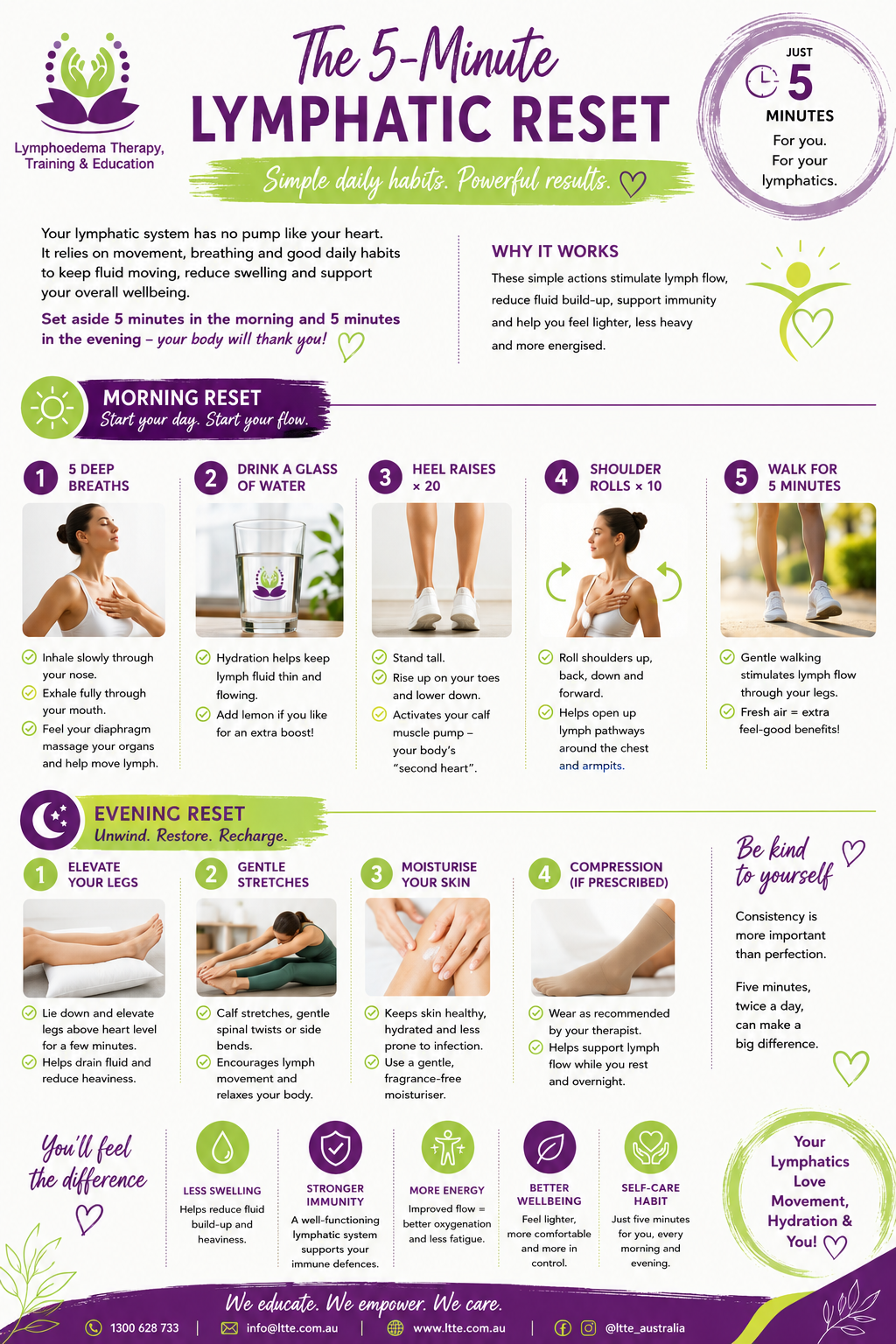
Five minutes can make a difference.
When life gets busy, it's easy to think that if you don't have time for a long walk or a gym session, there's no point doing anything at all.
The good news is that your body doesn't always need a major workout to benefit from movement. Gentle activities such as deep breathing, calf raises, shoulder rolls and a short walk can all help support healthy circulation and lymphatic flow. Better still, they're easy to fit into your day.
That's why I've created this month's 5-Minute Lymphatic Reset, a simple morning and evening routine designed to help you build small, sustainable habits that support your overall health.
Remember, it's not about doing everything perfectly. It's about doing something, consistently.
📥 Download your FREE 5-Minute Lymphatic Reset below and give it a try this week! Download now

|
| | | |
| |
| | | |
| | |
👩⚕️ Therapist's Corner
The question I ask myself with every patient
Before I decide how to treat someone, I ask myself one simple question:
"Why is this patient swollen?"
That single question guides everything that follows.
- Is it lymphatic?
- Is it venous?
- Is it related to surgery?
- Is there inflammation?
- Could there be an underlying medical condition?
- Could it be medication-related?
Only after answering these questions can I determine the most appropriate treatment.
It's a simple mindset shift, but one that can completely change a patient's outcome.
At Lymphoedema Therapy, Training & Education (LTTE), I teach therapists to think before they treat. Because understanding the why is just as important as knowing the how.
💜 The right treatment starts with the right assessment. |
| | | |
| | | |
| | | |
| | |
| Thank you for continuing to support lymphatic health awareness, education, and advocacy.
Please feel free to share this newsletter with anyone who may benefit.
Hope to see you on one of the live lipoedema webinars.
Jacqui Beutel
Accredited Decongestive Lymphatic Therapy Practitioner
Registered Nurse, RMT
Lymphoedema Therapy, Training and Education |
| | | |
| | | |
|